
Farewell, LIV Golf, we hardly knew ye. After four years, £4bn spent and a prolonged and ultimately pointless civil war, LIV is dead, or at least in its dying days.
Key figures behind the project were scrambled to an emergency meeting in New York this week amid reports that Saudi Arabia’s Public Investment Fund (PIF) is ready to end its lavish spending on the rebel golf league. LIV Golf CEO Scott O’Neil sent a memo to staff insisting they will finish the current season at “full throttle”, continuing this weekend in Mexico City. But without PIF’s deep wells of money, there is no future beyond 2026.
There had been signs of creaking, with big contracts nearing an end and some star names jumping ship. Brooks Koepka and Patrick Reed departed, and more would surely have followed, given time. The irony is that LIV had only recently secured Official World Golf Ranking (OWGR) points for its players, finally adding the layer of credibility it desperately sought.
Instead, this looks like the end, and what a colossal waste of everyone’s time that was.
It got off to an inauspicious start when tickets remained on sale as the first tournament teed off at the Centurion Club near St Albans in June 2022. There was no leaderboard on the website and there was no UK broadcast deal in place to show the action.
Then there was the format, played out over three rounds, with the entire field teeing off together in a shotgun start that made any narrative impossible to follow. It all painted a picture of an expensive gimmick, and the clincher was the team names: HyFlyers, Iron Heads, Majestick, Range Goats, Torque, Fireballs. It sounded more like an episode of Robot Wars than a golf tournament.
What was achieved from this futile enterprise? A few men got very rich, rich beyond their wildest dreams in golf. That has come at a cost, because most of LIV’s stars appear to be worse players than they were four years ago. Perhaps the moment Mohammed bin Salman considered pulling the plug on Saudi’s golf venture was watching LIV’s flagship player, Bryson DeChambeau, knife a bunker shot through the 18th green to miss the cut at the Masters.
Ultimately, LIV could never shake the sense that these guys were doing it for the money. “It’s an opportunity that I had to take,” Laurie Canter, the current world No 103, admitted to The Times after he earned a life-changing £4.5m before quitting the tour.
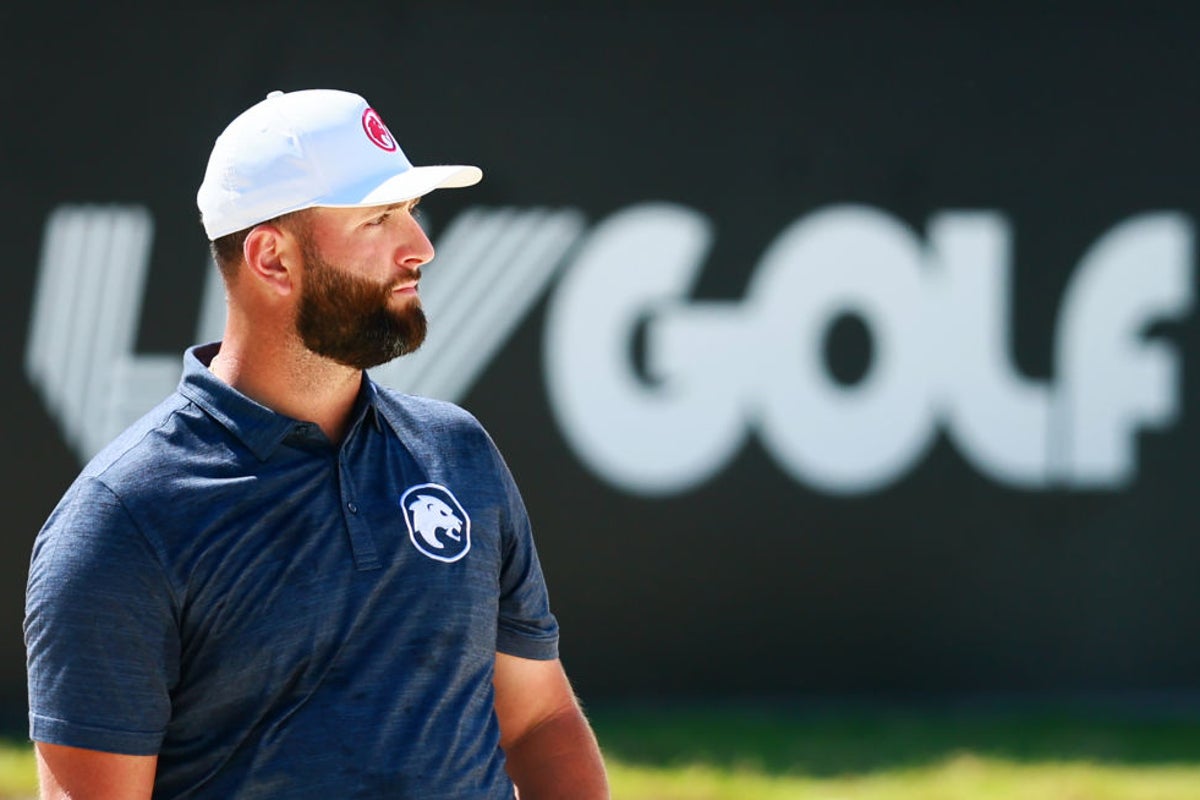
At the other end of the scale, Jon Rahm signed a contract thought to be worth £500m, enough for several generations of Rahms never to worry about money again. Perhaps it doesn’t jolt the conscience, but the LIV field will have to carry the reality that their money was directly received from an authoritarian state that incarcerates and executes dissenters.
In this sense, LIV Golf did achieve something. It coaxed famous global stars to front its project: cash for a seal of approval and a smiling face on the billboard. And, really, this was the goal all along: accruing legitimacy and displaying soft power on the global stage.
Over the past decade, Saudi Arabia has invested £600m into a long-term deal with Formula One, spent £400m on a Premier League football club and invested lavishly in horse racing, tennis, chess and boxing. What was so eye-catching about LIV Golf was the brazenness of it – no cloak and dagger, no softly softly approach, instead simply buying up names under the thinnest of thin veils about “growing the game”.
It took a strong stomach to turn down eye-watering offers, although some did. Rory McIlroy, Tiger Woods, and to a lesser extent Scottie Scheffler held the PGA Tour together with their rejection of sums in excess of Rahm’s contract.
The PGA Tour is not immune to competition, of course. Golf’s stiff traditions have their flaws, and the game should never be a closed loop. But LIV’s aggressive attempt to offer a compelling alternative, to be “golf but louder”, failed. Even when events drew healthy live crowds in Australia and South Africa, they failed to bring eyeballs on TV, attracting around 300,000 viewers on Fox Sports in the US, compared to around 2 million for a typical PGA Tour event. LIV didn’t cut through.
It did jolt the PGA Tour to counterattack, which led to bumps in prize money and a new tier of signature events with smaller, high-quality fields without a cut – something which deliberately mimicked one of LIV’s innovations. “Imitation is the greatest form of flattery,” LIV Golf tweeted at the time. “Congratulations PGA Tour. Welcome to the future.”
It was slightly comical, then, when LIV was forced to copy the PGA Tour earlier this year. The name LIV comes from the Roman numerals for 54, a nod to the league’s three-day, 54-hole format, which was meant to make for a more fast-paced, entertaining show. But LIV switched to the traditional 72 holes in an effort to win those elusive ranking points. LIV Golf was always a hollow venture, and by the end, even the name was meaningless.