

By Makayla Walker and Andrew Hall
AFRO Interns
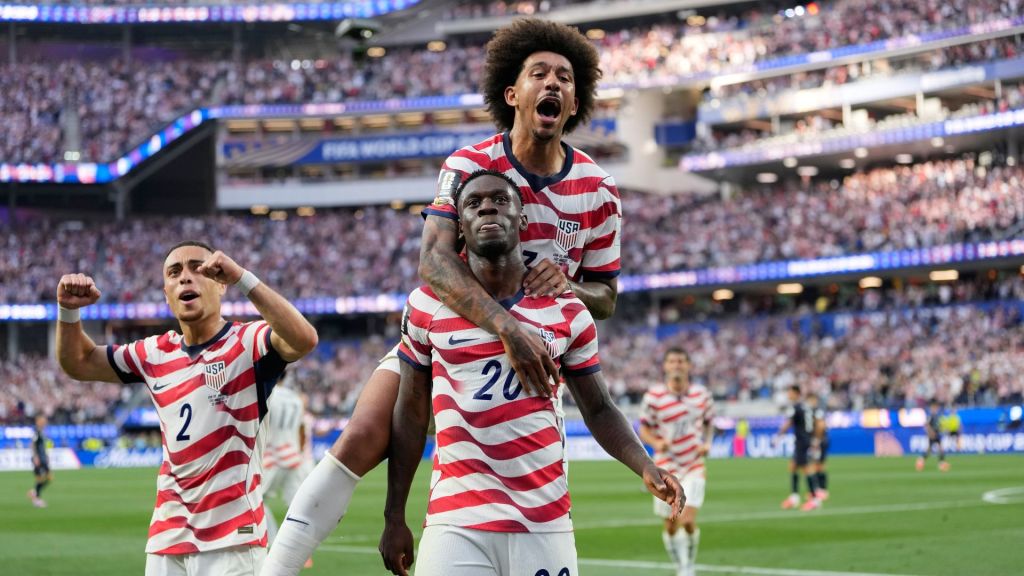
The highly anticipated 2026 World Cup has begun, and the United States Men’s National Team (USMNT) has their eyes set on championship gold. In their opening match on June 12, the USMNT was powered by a historic performance from star forward Folarin Balogun as they defeated Paraguay, 4-1.

A sold-out crowd of 70,492 packed SoFi stadium in Inglewood, Calif., as the USMNT sported a lineup featuring seven Black starters. Joining Balogun, midfielders Weston McKennie, Malik Tillman and Tyler Adams, as well as defenders Alex Freeman, Chris Richards and Antonee Robinson were all starters for Game 1.
Balogun, who was named “Man of the Match,” scored two goals, becoming the first USMNT player to do so in a World Cup game since the program’s first tournament appearance in 1930.
Balogun, 24, was born in Brooklyn, N.Y., to Nigerian parents, Florence and Ben. In an ESPN interview, Bolgun’s mother explained how she traveled to New York while she was seven months pregnant with him, and was denied permission to fly back home to the United Kingdom. She gave birth in July, and weeks later, the family returned home.
Balogun remained in England, where he quickly rose through the ranks of the UK youth soccer circuit. His unique triple nationality meant he could’ve played for United States, England or Nigeria’s national teams. Despite this, Balogun committed to the USMNT in 2023, a decision that was fueled by his mother.
“I don’t believe things happen by luck,” said Florence Balogun in an ESPN interview. “I think for me to have gone to America and for me to have had him there, it is just something that has really stuck with me. Even when he wasn’t even thinking of making an international decision, I’d already made up my mind that he is going to play for America.”

The USMNT entered the World Cup with its most diverse lineup in program history, featuring 12 Black players.
Time Ream, the oldest player on his mid-career team, explained that, “This team is a microcosm of what the United States is.”
“It’s representative of the entire country,” Ream told The Guardian. “So many backgrounds, different cultures, different ways of doing things, different beliefs, and that’s OK…”

Credit: AP Photo / Nick Wass
In 1990, Jimmy Banks and Desmond Armstrong became the first African Americans to represent the USMNT in the World Cup. Banks appeared in several matches and was a standout defender during the US’ 1990 run. Armstrong, who started and played every minute of the three group stage matches, went onto earn 81 total caps and was inducted into the National Soccer Hall of Fame.
In a BBC interview, Armstrong recalled watching the sport and feeling an immediate connection to Pelé, a notable Afro-Brazilian soccer player. Being from a predominantly white neighborhood in the District of Columbia, Armstrong was often berated by comments urging him to stop playing soccer and stick to basketball.
However, after watching Pelé shine alongside his majority white teammates, Armstrong felt inspired to continue playing soccer. Oceans apart, but tethered by their indisputable love for the sport, both men blazed a path for future generations who share that same passion for soccer.
Armstrong’s story of unwavering determination is one of many that drives the most racially and culturally diverse USMNT in history as they chase the country’s first World Cup win in program history.
Group competition for the USMNT concludes this week. The U.S., who joined Australia, Turkey and Paraguay in Group D, finished at the top of the group, earning an automatic pass to the round of 32.