

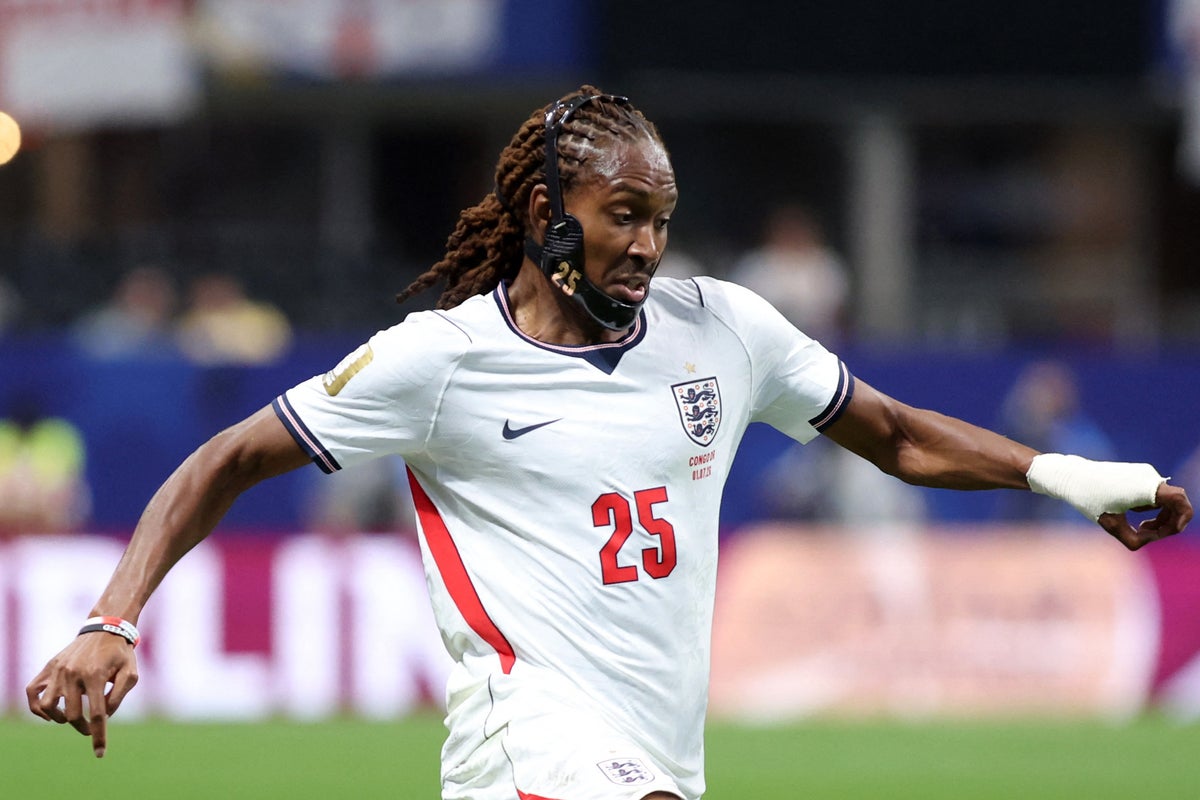
Thomas Tuchel’s prowess in knockout football helped persuade the FA to appoint him England manager. As his side stumbled then surged into the last 16 of the World Cup 2026, it is debateable if it was underlined against the Democratic Republic of Congo. Tuchel may have been the catalyst for a comeback; with his substitutions, with his interventions at hydration breaks.
Yet the greatest evidence that Tuchel is the king of the knockouts was supplied by shutouts. In 2021, his Chelsea won the Champions League when conceding just twice in their last seven games. If his England can add the greatest prize in international football, it may have to come another way.
For a German, there was a feat that brought his homeland to mind. This was the first time England won a World Cup game in which they had gone 1-0 down since the 1966 final against West Germany. Had Yoane Wissa’s shot, which rattled the post just before half-time, put the African underdogs 2-0 up, there may have been no way back. Nor would it have been any great shock.
If Tuchel’s Chelsea had an impenetrable defence, his England have an unconvincing one. The flagship fact was that, when John Stones made his belated reappearance on the pitch and Ezri Konsa was moved into a wider role, England were up to five right-backs in the tournament. Three came against DR Congo alone: Djed Spence, then Declan Rice, then Konsa. The more observant may note that Rice is not a right-back at all though, like Steven Gerrard before him, he possesses the skill-set to operate almost anywhere. He contributed a cross that led indirectly to Harry Kane’s equaliser.
The captain’s winner was the goal that is destined to be remembered yet Congo’s opener is the one that illustrated that England have a soft underbelly. There had been hints already. They had looked vulnerable to the counter-attack against Ghana and Panama; teams who scored two and zero goals in the group stage respectively did not take advantage. If Ghana had more ambition, if Panama had a finishing touch, it might have been different. England escaped then. They did not improve.
Unlike Tuchel’s Chelsea, this England team are not built on such solid foundations. There was the illusion of an iron defence. England went through qualifying without conceding, Jordan Pickford with an immaculate collection of clean sheets against the undistinguished. Yet they have not kept one against the better teams they have faced: Senegal, Uruguay, Japan, Croatia, DR Congo. And arguably none of those belongs in the top tier of international sides.
And this was why the argument that England would play better against the better sides looked flawed; not if they can’t defend. Brian Cipenga’s goal was damning, in part because England were caught out by one of their own tactics. Tuchel looks to switch play to the winger on the far side, hoping he is free; when DR Congo did that, Cipenga was in space.
Spence had been dragged infield; he needed Noni Madueke to provide cover behind him, but there was none. There was an England-born right-back who made a terrific goal-line clearance; but it was Aaron Wan-Bissaka, called up for England, never capped by them and now representing the Congolese.
Wan-Bissaka even produced a devilish cross that deflected into the path of Wissa, who hit the woodwork. England do have a right-back with a well-earned reputation as a crosser but Trent Alexander-Arnold’s omission appears still odder by the game. Factor in Ben White and Tino Livramento, each injured before Reece James and Jarell Quansah were, and the Liverpudlian is down to seventh in line. Spence may be the face of England’s right-back farce, but greater fault lies with Tuchel.
His defensive blueprint appeared based around James, who is injured, and Stones, who was omitted after the victory over Croatia game and returned in injury time in Atlanta. It always looked a risky strategy. It was destroyed within two games.
Stones’ best is immaculate but he last completed 90 minutes in the Premier League in August. Pep Guardiola sent Tuchel a message with his team selections. It went unheeded. Konsa and Marc Guehi perhaps always should have been the centre-back pairing, even if they have the air of the 2014 double act of Phil Jagielka and Gary Cahill; not England’s best ever, but their finest options in a fallow period.
Where Tuchel may be unfortunate is that England’s two outstanding – or most consistent, anyway – tournament players over the course of the Gareth Southgate years, arguably, were Pickford and Stones. The goalkeeper has been below his best, the centre-back a fringe figure. Perhaps Pickford could have done better when Cipenga struck.
His opposite number, Lionel Mpasi, was magnificent. Le Havre’s second-choice goalkeeper looked first class. The Democratic Republic of Congo had the defensive resolve England lacked. Kane nevertheless turned rescuer. The relief should spread from the manager to the rearguard but it may have only postponed the reckoning. Because England can’t win the World Cup if they are so fragile at the back.