
While the club broke transfer records, the problem for the transfer guru was what they could not buy. Or did not, anyway.
Liverpool’s summer departures will include Mohamed Salah, Andy Robertson and, now, Michael Edwards; in his first stint at Anfield, perhaps the most celebrated sporting director in the game. In his second, as Fenway Sports Group’s CEO of football, a man heading a multi-club operation with a solitary club.
Edwards’ decision to move on, a year before the end of his lucrative contract, was made last autumn, when he handed in his notice. It predated much of Liverpool’s troubled season and the sacking of Arne Slot, if not the record outlay of £450m on players, and £125m on Alexander Isak, last summer.
But when he was persuaded to return, it was supposedly to head up a bigger project. FSG looked at a host of other clubs – Malaga, Bordeaux, Toulouse, and 20 or more others – but bought none. The outlay was of more than half a billion on players, including this summer’s additions, but nothing on clubs. FSG was not to become Merseyside’s answer to the City Football Group or (perhaps thankfully) BlueCo.
It also invited the question of what Liverpool’s collection of directors of football all did. Edwards brought Julian Ward back, as FSG’s technical director, and recruited Pedro Marques, as their director of football development, while Richard Hughes, an ally from his Portsmouth days, was his appointment as sporting director of Liverpool.
Without any other clubs, Edwards decided there was no point in him staying simply to bank a salary. Nor did he have any wish to be a sporting director again. The job was not working out the way he, or FSG, envisaged. He thought it was a natural time to step away.
And yet while he was not often seen at the club’s Kirkby training ground, and Hughes was the immediate point of contact for Slot, Edwards’ exit will plunge Liverpool further into uncertainty. From having too many sporting directors, they could have a vacancy: Hughes, who only has a year left on his contract, will remain for the rest of this window but many expect him to go to Al Hilal.
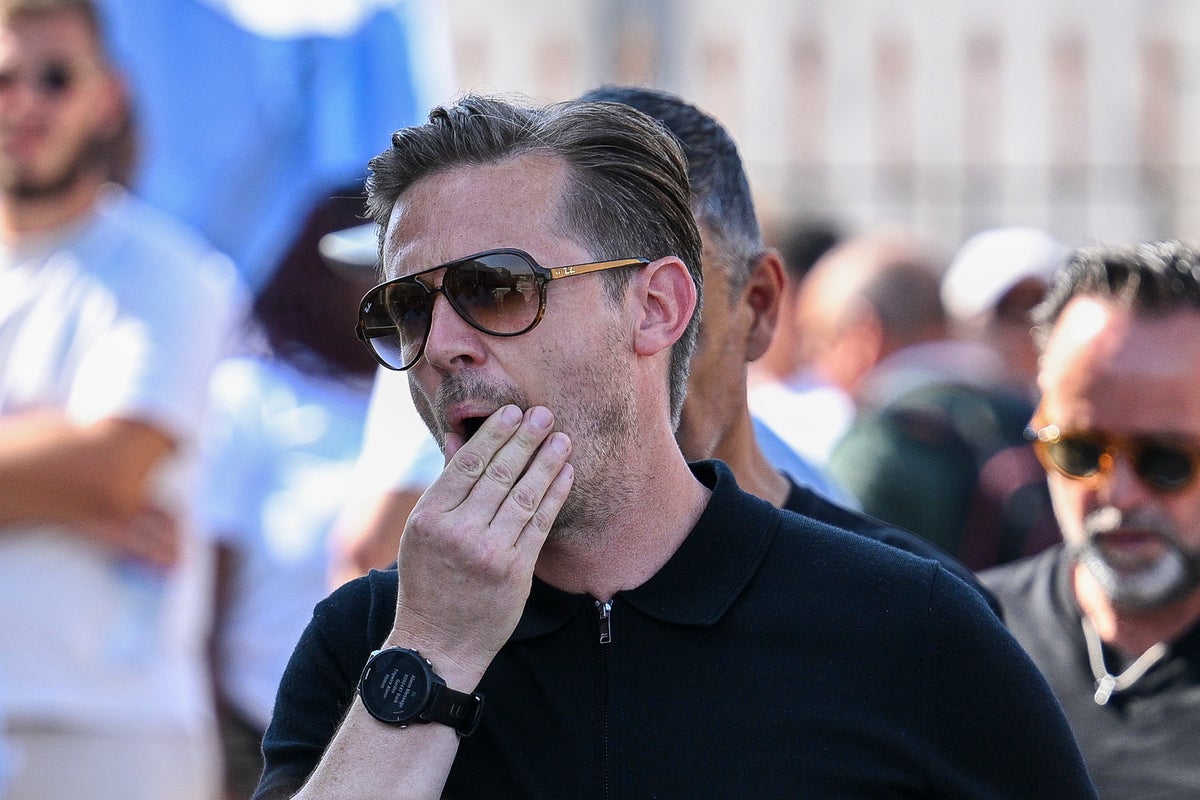
Low profile as he is, and there are few pictures of Edwards, he was a face of a change in football. Yet if the suits behind the scenes were supposed to provide continuity, now Liverpool have little. They had a structure which, when Edwards left in 2022, allowed manager Jurgen Klopp to assume greater power. They reintroduced a structure, but now pillars of it are being demolished.
A new head coach, Andoni Iraola, may wonder what he is walking into. The Spaniard has been appointed by ex-Bournemouth man Hughes for a second time but Liverpool, who have looked among the best-run clubs in the league for much of the past decade, now seem to have a void; some would say a mess.
They have an enduring belief in smart recruitment, player development and long-term planning, and most of that half a billion has been spent on young players but Edwards’ legacy from his second spell is decidedly mixed. His first was an unqualified success, both on the pitch and in the transfer market.
Salah and Robertson were two of Edwards’ great successes; it is scarcely news that Liverpool’s data department were the evangelists for the Egyptian, persuading Klopp, while the Scot, the £7m buy who became arguably the best left-back in the world, was an extraordinary bargain.
But the last two years paint a different picture. Edwards can point to a second Premier League title of his time; the appointment of Slot was initially a spectacular success. Liverpool’s methodology looked inspired when the Dutchman proved a natural fit in his debut season.
Yet Slot’s struggles in his second were attributable in part to the Hughes-Edwards axis and their buying. The statement signing of Isak backfired horribly. Liverpool spent £450m and still had holes in their squad. They look a team in need of a further rebuild. While Victor Munoz has arrived this summer, Liverpool are yet to secure the Salah replacement they require; it may not be Yan Diomande.
Iraola is left to pick up the pieces: to determine where Florian Wirtz plays, if Jeremie Frimpong can be used as a right-back, how to configure the midfield and manage the transition from Virgil van Dijk to younger defenders.
Edwards will leave with a job half done. Hughes may, too. Edwards’ record of spectacular successes in his earlier time on Merseyside – not just Salah and Robertson but Sadio Mane, Roberto Firmino, Gini Wijnaldum, Fabinho, Alisson and Van Dijk – would nevertheless mean he would top the shortlist for many a club wanting a sporting director.
He feels, however, that he has moved beyond such roles. It will be interesting where he goes next. But also, too, if Iraola’s Liverpool serves as a vindication or an indictment of the last two years, of Edwards’ return and his regime with Hughes.