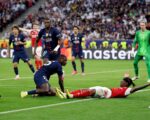

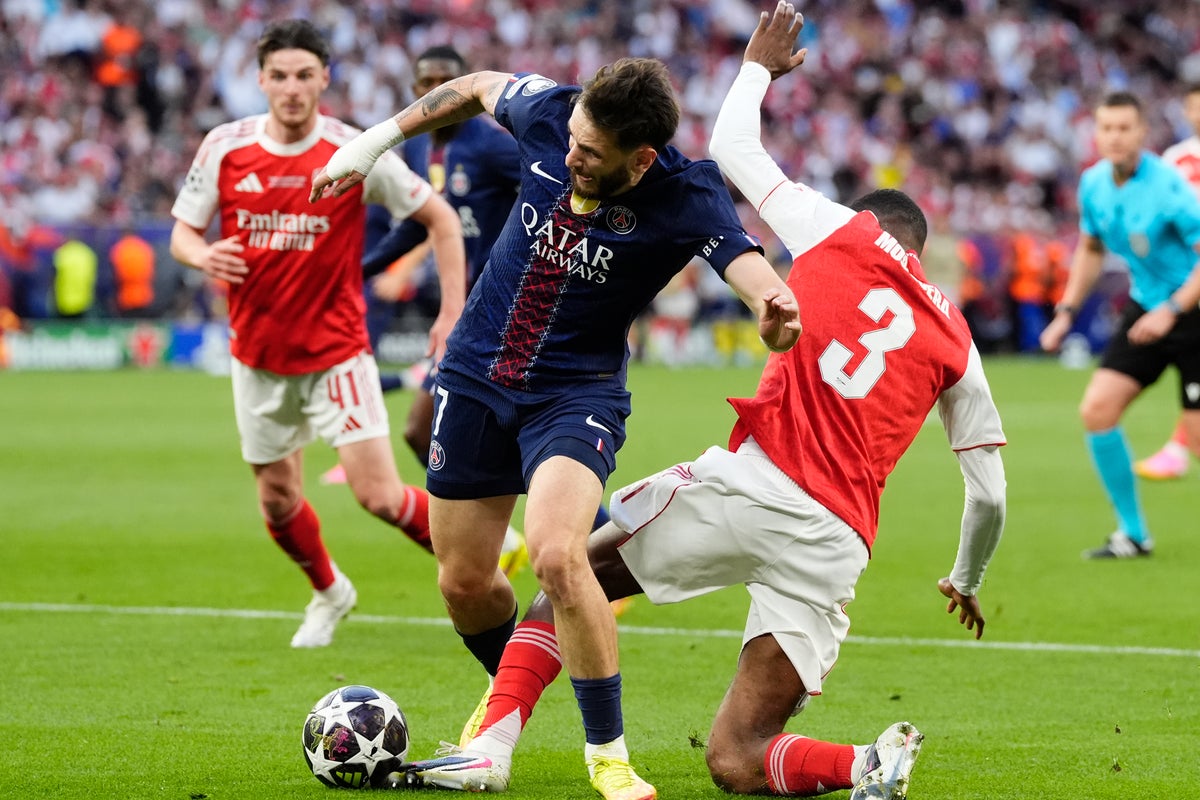
The most fitting way for Arsenal’s season to end, it appeared, necessitated a set-piece and Gabriel Magalhaes. Just not this particular set-piece or, for them, this particular end. The personification of their uncompromising excellence from corners was instead – strangely – on penalty duty, blazing a spot kick into the end populated by Paris Saint-Germain ultras.
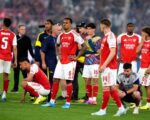
The red flares were lit, but the red half of North London were in mourning. Second again, 20 years after their first Champions League final. In the plush seats, flanked by Luis Figo, Arsene Wenger had looked pensive more than an hour earlier. The scoreline could have given him grounds to smile, but he had seen this situation before. Arsenal one up in the Champions League final? That did not end happily in 2006. It wouldn’t in 2026 either.
Mikel Arteta, the master of detail, the manager who seemed to leave nothing to chance, appeared to have neglected one key element. Matvei Safonov, Paris Saint-Germain’s utterly unconvincing goalkeeper, saved nothing: not in the match, and not in the shootout either. Arsenal only needed to get their penalties on target, especially with David Raya making a terrific stop from Nuno Mendes. But Eberechi Eze followed a stuttering run-up by sidefooting wide. Gabriel skied his.
Live by the set-piece, die by the set-piece? Maybe. Arsenal’s Champions League campaign ended with defeat and yet undefeated. They did not lose a game in 90 or 120 minutes, let alone a tie. Results gave them a fine claim to be Europe’s best team this season. But against the side who retain the distinction of being champions of Europe, who pass the eye test as the outstanding outfit, they played with an inferiority complex.
Arsenal completed 199 passes, PSG 837. Indeed, Arsenal only completed 1.3 passes per kilometre their players ran; over 150, some 6.6 more than PSG. It was the price of not having the ball. Uefa’s possession statistics gave them a 36 percent share, Opta’s a mere 24.7; the latter felt the more accurate.
It was one of those days when it seemed Arteta had remembered precious little of his education at La Masia; when, of his managerial mentors, he resembled David Moyes more than Pep Guardiola. And yet, when his right-back was a centre-back, his left-back was a centre-back and his two centre-backs were centre-backs, he looked more like Tony Pulis than either.
But perhaps it would have been foolhardy to play PSG at their own game. Bayern Munich tried in the semi-final, contested a classic and lost 5-4 at the Parc des Princes. That was the game of the competition; the true final, some might say. But the Gunners had progressed to the actual final their way. The endless attrition of Arteta’s Arsenal meant they were the side PSG could not destroy.
It had been billed as attack against defence. Arsenal gave themselves a lot of defending to do, partly by doing too little attacking. After Kai Havertz’s sixth-minute goal, they did not have a shot on target in the remaining 114 minutes; nearer 124, given the added time. Which, given the vulnerability of PSG and the frailties of Safonov, may have been a missed opportunity.
But PSG did not attack to their full capability; they were devastating against Inter in last season’s final, dragged into dullness by Arsenal. Arteta’s side saw off Khvicha Kvaratskhelia and Ousmane Dembele and Vitinha, all substituted.
Arsenal delivered a masterclass in off-the-ball shape, in organisation, in concentration. They defended in a 4-4-2-0 formation, no one near the half-way line. Forget two banks, this was three. But it was an approach that meant they had to be flawless, and they were not. Cristhian Mosquera, the third-choice right-back, got the wrong side of Kvaratskhelia for a second. Penalty. The lead that Arsenal held for 59 minutes was wiped out.
And their defensiveness came at a cost: to themselves. Martin Odegaard went off after just 12 touches in 65 minutes. That felt a waste of a talent. Bukayo Saka was muted, too. Leandro Trossard got an assist, but by charging down a clearance.
The exception among the attackers was the terrific Havertz. Arteta had shown his clinically unsentimental streak by omitting Viktor Gyokeres, whose finest Arsenal performance came in the first leg of the semi-final against Atletico Madrid, whose grandfather fled Hungary. Havertz started and became just the third player to score in Champions League finals for two clubs; but, like Mario Mandzukic, the second did not come in victory.
The German is a curiosity of a footballer; not really a forward, not really a midfielder but very much a Kai Havertz. He was a sign, though, that wherever Arteta had a selection dilemma, except perhaps Myles Lewis-Skelly for Martin Zubimendi in midfield, he took the more defensive option.
Defence could have worked, too. Defence, indeed, won Arsenal’s last European trophy, the 1994 Cup Winners’ Cup. The now familiar chant of “1-0 to the Arsenal” dates back to victory over Paris Saint-Germain this season. When it was 1-0 to the Arsenal again, it looked like they may bore their way to glory in a way Wenger’s great aesthetes never could on the continental stage. But Arsenal have been accused of reducing football to a procession of set-pieces. And when there were 10 penalties in a row, they missed two. Set-piece again, oh no, oh no.