

Let it not be forgotten that the cricketers got there first. In the build-up to this summer’s Women’s T20 World Cup, there has, naturally, been talk of England picking up the baton from the Lionesses and Red Roses and securing success on home soil. “As a fan, I was captured by what they were doing,” captain Nat Sciver-Brunt admitted earlier this year. “What a chance we have to grow the game in England. It’s going to be a really special time.” But she, and a couple of her squad mates, have already experienced that sort of triumph, Lord’s sold out for England’s day in the sun in the 50-over format in 2017 to catapult women’s cricket into a new era.
The challenge for Sciver-Brunt and co., then, is to do it all over again. While the 2017 World Cup was afforded a certain prestige and prominence, a changing landscape in the nine intervening years has offered both more potential and pressure – where a premature exit then may have been met by a sigh and a shrug, there is a sense of expectation on a home team going deep.
There is reason to wonder if this current crop is champion material but England have habit of delivering on home soil – and in Charlotte Edwards, a T20 World Cup winning captain in 2009, the sort of coaching expertise that may be required for them to take the final step again.
“It goes without saying that I want to add my name to the list of England captains who have lifted a World Cup at home, and I don’t want to be the first England captain not to do it,” Sciver-Brunt admitted as she looks to follow in the footsteps of her coach. “And when you are the host nation, whether you are ranked top or not, it gives you an edge.”
That 2009 tournament was England’s last success in the T20 format; the 2017 World Cup their last major trophy of any kind. That, of course, has plenty to do with perennial powerhouse Australia but recent years have seen others emerge to disrupt their dominance, and it is a nagging concern that England – as well resourced as any nation – has not.
The installation of the highly-qualified and no-nonsense Edwards put a proven winner at the helm, but returns in the 14 months since her appointment have been mixed. The manner in which they were dismissed by South Africa in last year’s 50-over World Cup semi-final felt worrying, while persistent fears over fielding and fitness have not entirely been allayed.
A calf injury to the captain, which may prevent her from bowling, has been another unwelcome distraction and complication ahead of the tournament – though has allowed a batting order to clarify around her. Alice Capsey’s strong start to the summer seems to have snatched a spot from Sophia Dunkley, with Amy Jones stationed at the top of the order; it is hoped that Freya Kemp and Dani Gibson can offer the lower-order hitting England have lacked compared to their rivals.
The bowling attack is a more settled suit: Lauren Bell and Linsey Smith are a new-ball pair of contrasting heights and styles, while the emergence of teenager Tilly Corteen-Coleman means even Sophie Ecclestone cannot rest on her laurels and be certain of a spot. That sort of jeopardy over selection should aid an environment too often accused of cosiness.
Will it be enough to turn a team that has struggled to handle the big stage into T20 World Cup winners? One would say it may be unlikely. Australia lurk, still, as a team of unrivalled talent from top to bottom and with a point to prove after relinquishing their crown in both formats over the last two years. It has been hard to figure out precisely why their hegemony has broken but the appointment of Sophie Molineux as captain perhaps hints at a sense of uncertainty. The all-rounder is an excellent cricketer but perhaps not a first-choice bowler or batter in Australia’s line-up. Can she be the steady head around which others thrive? Another trophy is overdue.
World Cup holders India, meanwhile, may threaten their place as the predominant power within the women’s game. The growth of the Women’s Premier League (WPL) has both swelled salaries for the best and cultivated a proving ground for domestic talent starting to step into the senior side. It is familiar faces, though, upon which their tournament will rest – a batting line-up of Shafali Verma, Smriti Mandhana, Jemimah Rodrigues, Richa Ghosh and captain Harmanpreet Kaur will be hugely watchable, if nothing else.
Beyond the traditional trio are two more possible contenders. New Zealand are the defending champions and thus merit strong mention, though there is a sense that the White Ferns may be caught between two eras. It could be a golden goodbye to Sophie Devine, Suzie Bates and Lea Tahuhu or a coming-of-age campaign for someone like Georgia Plimmer or Bree Illing. Melie Kerr, triumphant player of the tournament two years ago, straddles the gap.
If that T20 World Cup win in the UAE felt like the culmination of their journey, South Africa are due something similar – beaten finalists in the last three major tournament finals, the returns from retirement of Shabnim Ismail and Dane van Niekerk accentuate an experienced squad with few holes.
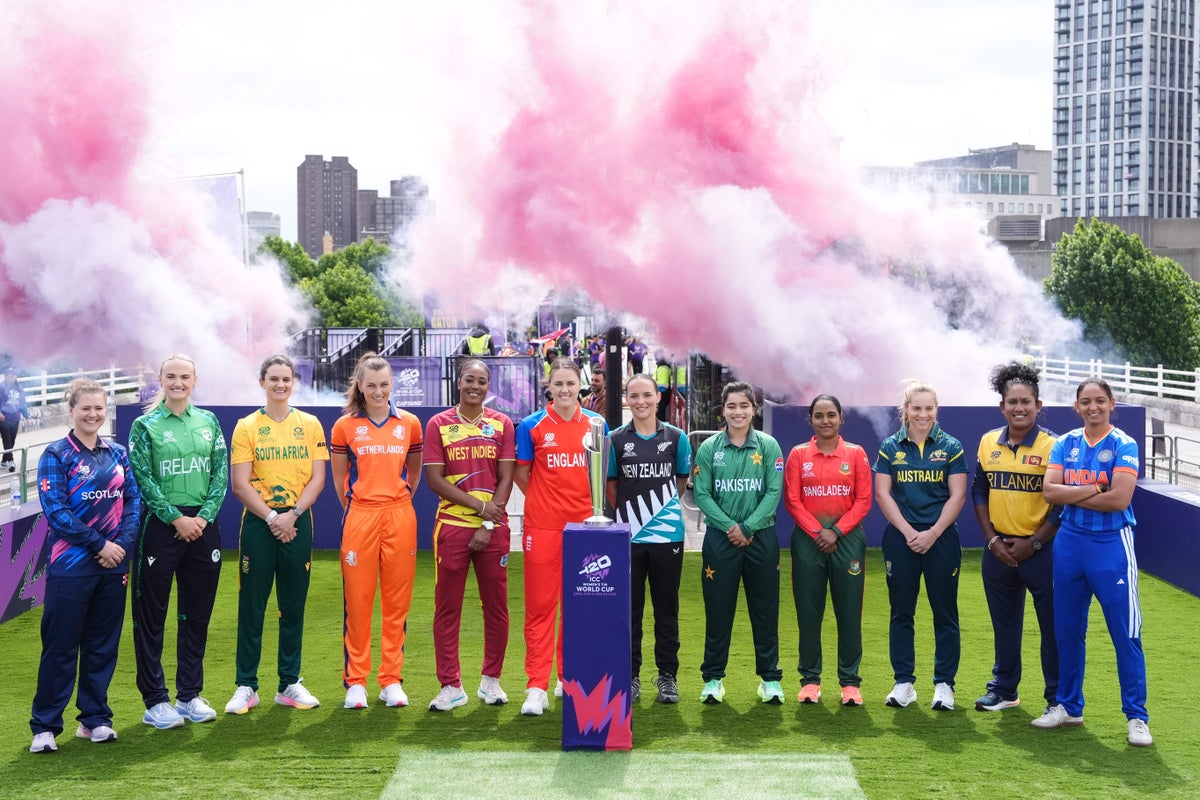
Beyond that quintet lie seven more nations that will enliven the largest Women’s T20 World Cup yet. The West Indies, Sri Lanka, Pakistan and Bangladesh are joined by Scotland, Ireland and the Netherlands, who will relish this opportunity not too far from home.
Cricket’s most capricious format can lend itself to an upset – for England to take the trophy at Lord’s again might count as one but history, at least, is on their side.