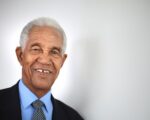

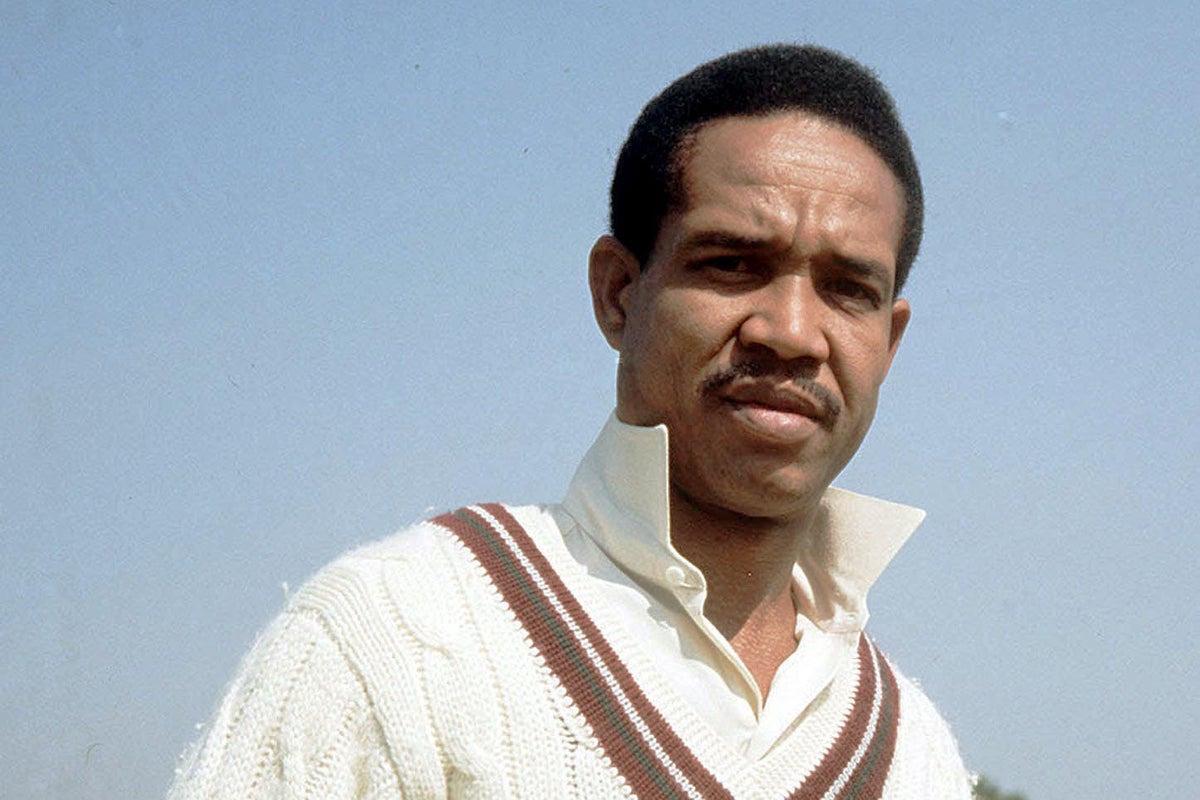
Sir Garfield Sobers was cricket’s greatest all-rounder and Barbados’ favourite son.
For decades, it was a daily occurrence around the streets of Bridgetown for taxi drivers to hail him – ‘Hello Mr Sobers, sir!’ – rather than the other way round.
Such was the level of national devotion to Sobers, who has died at the age of 89.
A brilliant, record-breaking batsman, bowler of finger spin, wrist spin and seam and outstanding fielder in all positions, he was the premier architect of a tradition which was to last beyond his own playing days through several generations of West Indian cricketing world-beaters.
Sobers’ supreme status extended far beyond the Leewards and Windwards too.
His then world-record Test score of 365 not out against Pakistan at Sabina Park in 1958 saw to that – as did, 10 years later for Nottinghamshire, his six sixes in the unfortunate Malcolm Nash’s over against Glamorgan in the County Championship at Swansea.
Sir Garfield St Aubrun Sobers, known to many the world over as Sir Garry, was born on July 28, 1936 in St Michael, Bridgetown.
The fifth of six children to Shamont and Thelma Sobers, his father died in action during the Second World War in 1942 when his son was just five years old.
Sobers was the owner of an extra finger on each hand at birth, soon removed and no detriment to his burgeoning cricket career.
It was his left-arm bowling which initially predominated over the left-hand batting for which he would ultimately become most renowned.
On his first-class debut as a spinner at just 16 for Barbados against the Indian tourists, he duly excelled with a seven-wicket match haul.
He was to play just one more first-class match, a year later as a number five batsman against MCC, before he was picked to face England in the final Test in Jamaica in March 1954, taking four first-innings wickets as a replacement for the poorly Alf Valentine in a heavy defeat.
It was in the following year that he began to show the world his capabilities as a batsman when, pressed into service as an emergency opener ahead of the Windies’ renowned middle-order trio Frank Worrell, Everton Weekes and Clyde Walcott, he dispatched Australia great Keith Miller for a string of early boundaries.
After steadier progression came that remarkable, unbeaten 365 as Sobers’ maiden Test century rewrote the record books.
It was an individual score to supersede Len Hutton’s 364 at The Oval 20 years earlier and would stand unopposed until another Windies world-beater Brian Lara raised the stakes again in the 1990s and 2000s.
There were no sixes in 21-year-old Sobers’ triple century, the first of 26 hundreds in a 20-year Test career which would bring him an average of 57.78 as well as 235 wickets at 34.03.
Before his knighthood was accorded in 1975, or he was named National Hero of Barbados in 1998, he had earned universal acclaim, including as captain of his country for seven years from 1965, which encompassed a summer as ‘King Cricket’ with an average above 100 in a series win in England in 1966.
There were darker times too. In later years especially, as drink and gambling reportedly took a toll without the riches bestowed on cricketers of lesser standing in the modern era, he did not always cut the most approachable figure.
During Sobers’ otherwise enjoyable and lucrative time playing league cricket in north-west England, one tragic incident was most significant.
In 1959 he was the driver in a car crash which would claim the life of friend Collie Smith and bring him a period of personal turmoil in which alcohol was intermittently an outlet.
He managed, however, to channel the upset as partial motivation to superlative effect back on the field.
Master batsman of an earlier age, Don Bradman, brokered Sobers’ successful stint with South Australia and was then among those moved to high praise for his 254 at the MCG as captain of the Rest of the World against the hosts in the Supertest series of 1971.
By then, Sobers had already made sure of further folklore – specifically to the people of Wales and Nottinghamshire, in his first of seven county seasons – thanks to his brutal feat of six sixes in an over on the August Bank Holiday of 1968.
The profile of his then unprecedented achievement was helped by the chance presence of BBC cameras and tales have abounded since of how far the final six was smashed out of the St Helens ground.
Despite a respectable career as a left-arm seamer, Nash never lived the occasion down, inevitably augmenting his stooge status down the years with his own vexed recollections.
“The captain asked me if I fancied having a go at bowling some slow-left armers,” he said.
“Sobers came along and quickly ended my slow-bowling career. It was a pretty short experiment.”
For Sobers, it was simply a case of see ball (very well) and hit ball (very far).
“I wasn’t bothered if I was out or not,” he said.
Sobers, who married Australian Pru Kirby in 1969 but divorced in 1990, leaves two sons, Matthew and Daniel, and an adopted daughter Genevieve.